
BJJ strength training program: free 2-day and 3-day plans
A free BJJ strength training program you can run around your mat schedule: 2-day and 3-day templates, how to progress them, and a printable PDF.
MatStrong · October 20, 2026 · 5 min read
The short version
- If you roll three or more times a week, lift twice. If you roll once or twice, you can lift three times.
- Every session covers power, a main lift, single-leg work, pulling, and grip or trunk work, in that order.
- Run the plan in four-week blocks: three weeks building, one lighter week.
- Stop most sets with two or three reps left, so you show up to class able to move.
Most "BJJ strength programs" are either a powerlifting program with a jiu-jitsu picture on top, or a random circuit that leaves you tired but no stronger. A good one is simpler than either: a few hard, well-chosen lifts, placed where they don't wreck your rolling, done consistently for months.
Below are two free templates, a 2-day and a 3-day plan, with the reasoning behind them so you can adapt them to your week. There's a printable PDF at the end.
What a BJJ strength program needs
Jiu-jitsu asks for a particular kind of strength. You need to:
- Produce force from bad positions: bridging, framing and standing up with someone on you
- Be strong on one leg: shots, sprawls, stand-ups and passing all happen in split stances
- Pull and grip for a long time: collar, sleeve, wrist and underhook battles
- Resist rotation and keep posture: a strong trunk that holds its shape under pressure
- Stay durable: shoulders, knees, neck and lower back that tolerate years of training
So every session in these plans covers five things, in this order:
- Power: jumps, throws or swings, done fresh, for low reps
- A main lift: a squat, hinge, press or pull for a few hard sets
- Single-leg work: split squats, step-ups, single-leg deadlifts
- Pulling: rows and pull-ups to balance the pressing and build the grip-and-pull strength you use on the mats
- Grip and trunk: carries, hangs, holds and anti-rotation work
Movements in this program
 Goblet squat
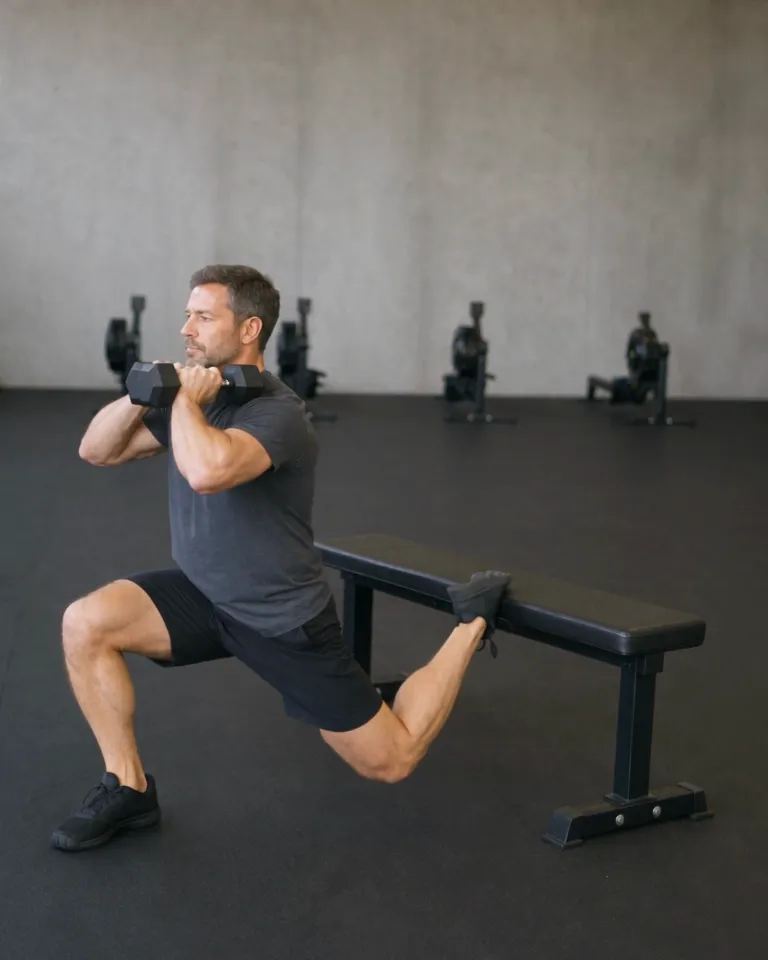 Rear-foot elevated split squat
 Single-arm dumbbell row
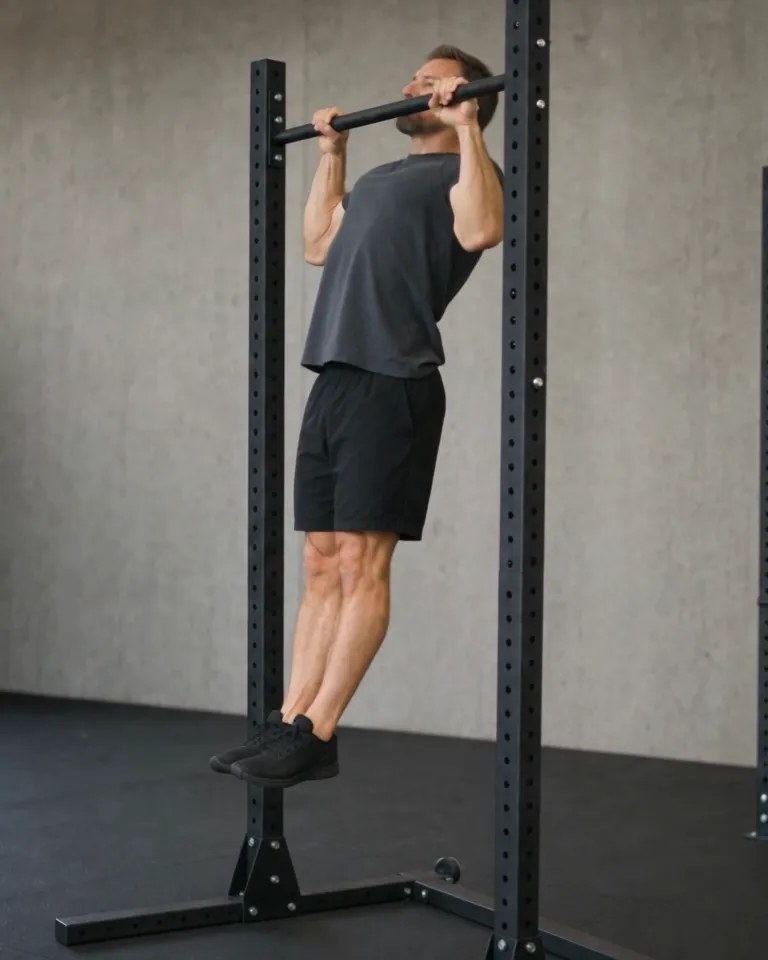 Pull-up
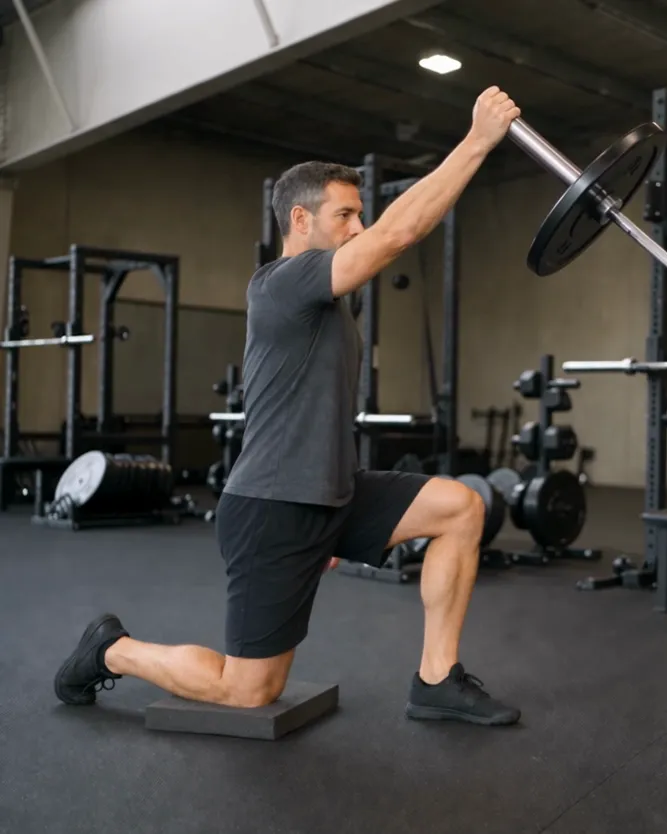 Half-kneeling landmine press
 Pallof press
 Farmer's carry
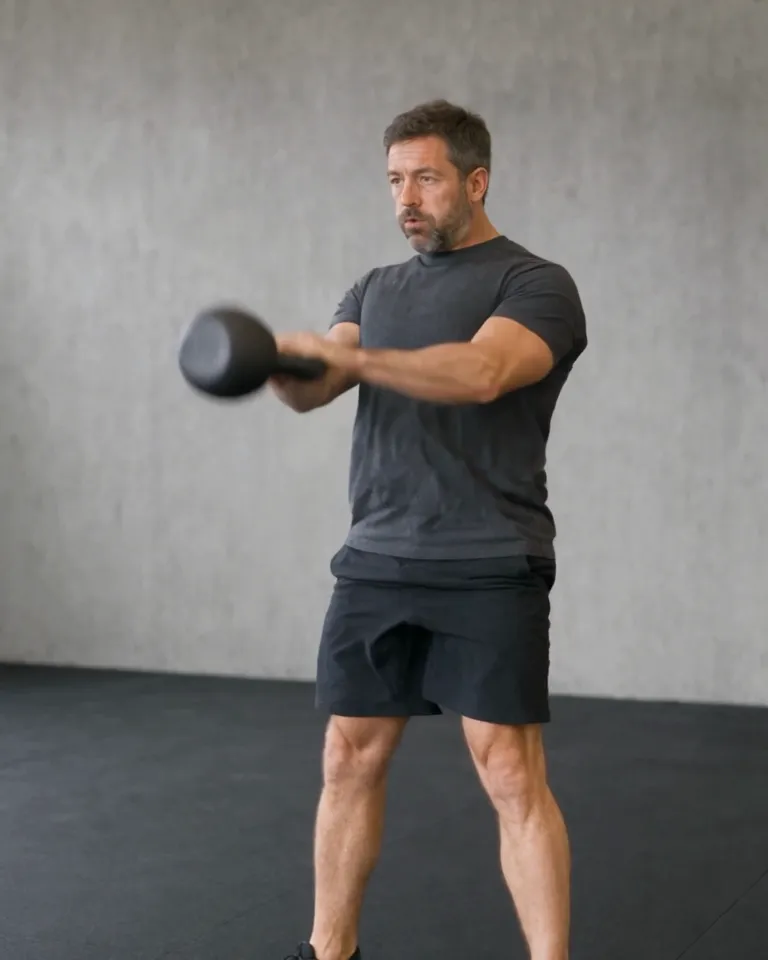 Kettlebell swing
How many days a week?
| You roll | Use | Session length |
|---|---|---|
| 1–2 times a week | The 3-day plan | 45–60 min |
| 3–4 times a week | The 2-day plan | 45–60 min |
| 5+ times a week | The 2-day plan, cut to the first four exercises | 30–40 min |
Put your lifting on days away from your hardest sparring. If you can only lift on a rolling day, lift in the morning or after class, and keep that session lighter. There's more on this in how to schedule strength training around BJJ.
The 2-day BJJ strength program
Warm up for 5–10 minutes before each session: easy cardio, then hip, upper-back and shoulder mobility, then a couple of light sets of your first lift.
Day A
| Exercise | Sets × reps | Notes |
|---|---|---|
| Broad jump or box jump | 3 × 3 | Full rest, full intent |
| Trap bar or kettlebell deadlift | 4 × 4–6 | Main lift |
| Dumbbell bench press | 3 × 6–8 | |
| Rear-foot elevated split squat | 3 × 6–8 each leg | |
| Chest-supported row | 3 × 8–10 | |
| Farmer's carry | 3 × 30–40 m | Heavy, tall posture |
Day B
| Exercise | Sets × reps | Notes |
|---|---|---|
| Med ball rotational throw or kettlebell swing | 3 × 5 each side, or 3 × 10 | |
| Goblet squat or front squat | 4 × 5–8 | Main lift |
| Pull-up (band-assisted if needed) | 4 × 4–8 | |
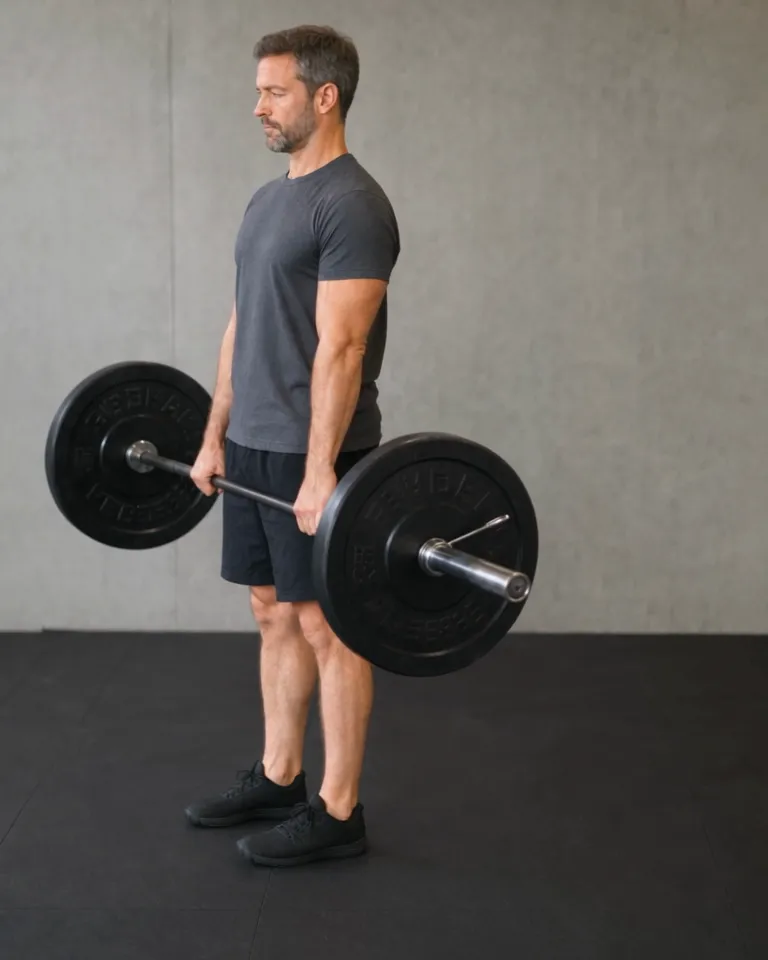
| Single-leg Romanian deadlift | 3 × 8 each leg | |
| Half-kneeling landmine or dumbbell press | 3 × 8 each side | |
| Pallof press | 2 × 10 each side | |
| Dead hang or towel hang | 2 × as long as you can |
The 3-day BJJ strength program
Days A and B are the same as above. Add Day C, a lighter full-body day that leans towards power and work capacity.
Day C
| Exercise | Sets × reps | Notes |
|---|---|---|
| Kettlebell swing | 5 × 10 | Crisp, not grinding |
| Step-up | 3 × 8 each leg | |
| Push-up | 3 × 2–3 short of failure | |
| Inverted row or single-arm row | 3 × 10 | |
| Suitcase carry | 3 × 30 m each side | |
| Side plank | 2 × 30 sec each side |
Spread the three days out, for example Monday, Wednesday and Saturday.
How to progress: four-week blocks
Strength comes from doing a little more over time, not from destroying yourself in one session. Run the program in four-week blocks:
| Week | How hard | What to do |
|---|---|---|
| 1 | 3 reps left in the tank | Find working weights you can do with clean form |
| 2 | 2 reps left | Add a little weight or one rep per set |
| 3 | 1–2 reps left | Add a little again |
| 4 | Lighter week | Half the sets, a bit less weight, stay sharp |
After week 4, start a new block a little heavier than the last one. Every two or three blocks, swap a few exercises for close variations (a front squat for a goblet squat, a single-arm row for a chest-supported row) to keep progressing and stay interested.
"Reps left in the tank" just means how many more good reps you could have done. It's the simplest way to keep lifting hard enough to get stronger without arriving at class wrecked.
Adjusting the plan
- Training at home? Most of this works with dumbbells, kettlebells and a pull-up bar. See BJJ strength training at home.
- Over 40, or carrying old injuries? Keep more reps in reserve, warm up longer and use the joint-friendly swaps in strength training for BJJ over 40.
- Gassing out is your biggest problem? Keep the strength work and add easy aerobic sessions. See how to not gas out in BJJ.
- Competition coming up? In the last week or two, cut the sets right down and keep a little speed work. Your jiu-jitsu and weight matter more than gym numbers.
- Something hurts? Swap the exercise for one that doesn't load that area and keep training the rest. If it's a new or sharp pain, get it checked by a professional.
Download the program
Free PDF · 2 pages
The 2-day and 3-day BJJ strength program
Every session, plus the four-week progression, ready to print or save to your phone.
Want it built around your own mat days, equipment and injuries instead? Take the assessment
Common questions
Is two days of strength training a week enough for BJJ?
For most people who roll three or more times a week, yes. Two well-planned sessions, each with power, a main lift, single-leg work, pulling and grip or trunk work, is enough to get stronger while leaving energy for the mats. If you roll only once or twice a week, a third session can help.
What are the best strength exercises for BJJ?
Deadlift variations (trap bar or kettlebell), squats (goblet or front), split squats and step-ups, pull-ups and rows, presses, loaded carries, and grip work like hangs. Add jumps, throws or swings for power. The best exercise is one you can load safely and progress for months.
Is 5/3/1 good for BJJ?
5/3/1 is Jim Wendler's popular percentage-based program built around four main lifts, and plenty of grapplers run it. It works best for BJJ with light assistance work and less volume in heavy mat weeks. The templates on this page use reps in reserve instead of percentages, because how tired you are from rolling changes from week to week.
Is there a PDF version of this BJJ strength program?
Yes. The 2-day and 3-day plans and the four-week progression are available as a free printable PDF at the end of the article.
General training information, not medical advice. If something hurts, or you have a condition that affects how you train, see a qualified professional before you change your training.
Your plan in 5 minutes
Take the quiz