Strength training for BJJ over 40
Recovery, joints and how much is enough: what changes when you're lifting for jiu-jitsu in your 40s, 50s and beyond, and what doesn't.
MatStrong · October 20, 2026 · 5 min read
The short version
- You can keep getting stronger well past 40. What changes is how fast you recover, so the dose matters more than the effort.
- Two lifting sessions a week, stopped short of failure, is plenty alongside regular rolling.
- Choose lift variations that your joints tolerate, and warm up for longer than you used to.
- On a bad day, change the exercise instead of skipping the session.
Plenty of people start jiu-jitsu in their 40s, and plenty more are still rolling in their 60s. The ones who last tend to have one thing in common: they stopped training like they were 25.
That doesn't mean training soft. It means being smarter about how much you do, how you do it, and what you do when your body tells you something is off.
What actually changes
You can still build strength and muscle at 40, 50 and beyond. The main differences are practical:
- Recovery takes longer. A hard leg session that used to cost you a day might now cost you two or three.
- Joints and tendons need more care. Old injuries speak up, and new ones take longer to settle.
- Warm-ups matter more. Going straight into heavy work is where a lot of tweaks happen.
- Life is busier. Work, family and sleep all compete with training.
None of that is a reason to stop lifting. Strength is one of the best things you can bring to the mats as you get older. It makes every position less costly and gives you a margin when someone younger and heavier puts you under pressure.
How much is enough
The biggest mistake older grapplers make is copying a program written for someone who only lifts. You're also rolling, and rolling is hard training.
A sensible starting point:
- Two lifting sessions a week, with at least a day between them
- 30 to 60 minutes each, including a proper warm-up
- Most sets stopped with two or three reps left. Grinding to failure costs more recovery than it's worth.
If you're rolling four or more times a week, one solid session plus one short one is often better than two full sessions. The 2-day plan in the free BJJ strength training program works well here: keep three reps in reserve and use the swaps below.
Pick variations your joints like
You don't need to do every lift with a straight barbell. The goal is to load the muscles hard without irritating the joints. Some swaps that many older lifters find easier to live with:
| Instead of | Try |
|---|---|
| Barbell back squat | Goblet squat, front squat or box squat |
| Conventional deadlift | Trap bar deadlift or kettlebell deadlift |
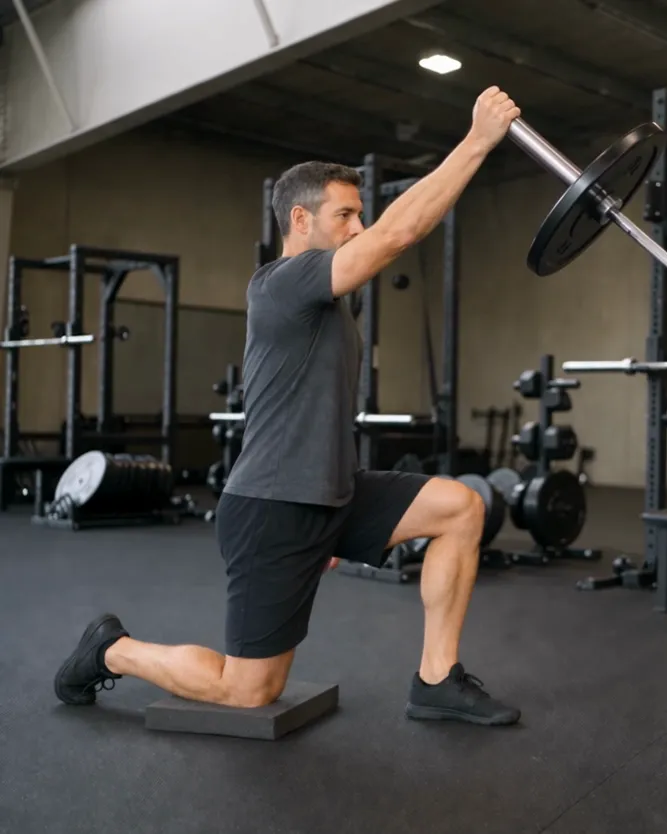
| Barbell overhead press | Landmine press or half-kneeling dumbbell press |
| Flat barbell bench | Dumbbell bench or push-ups with a slight incline |
| Heavy high-rep lunges | Split squats with a slow lowering phase |
Slower lowering phases and short pauses are your friend. They make lighter loads harder, which is exactly what you want when the joints are the limiting factor.
Warm up like you mean it
Give yourself 8 to 10 minutes: easy movement to raise your temperature, then mobility for hips, upper back and shoulders, then a few lighter sets of your first lift. It feels slow. It's a lot faster than a month off with a tweaked back.
Train the parts jiu-jitsu wears out
A few areas deserve a little work in almost every session:
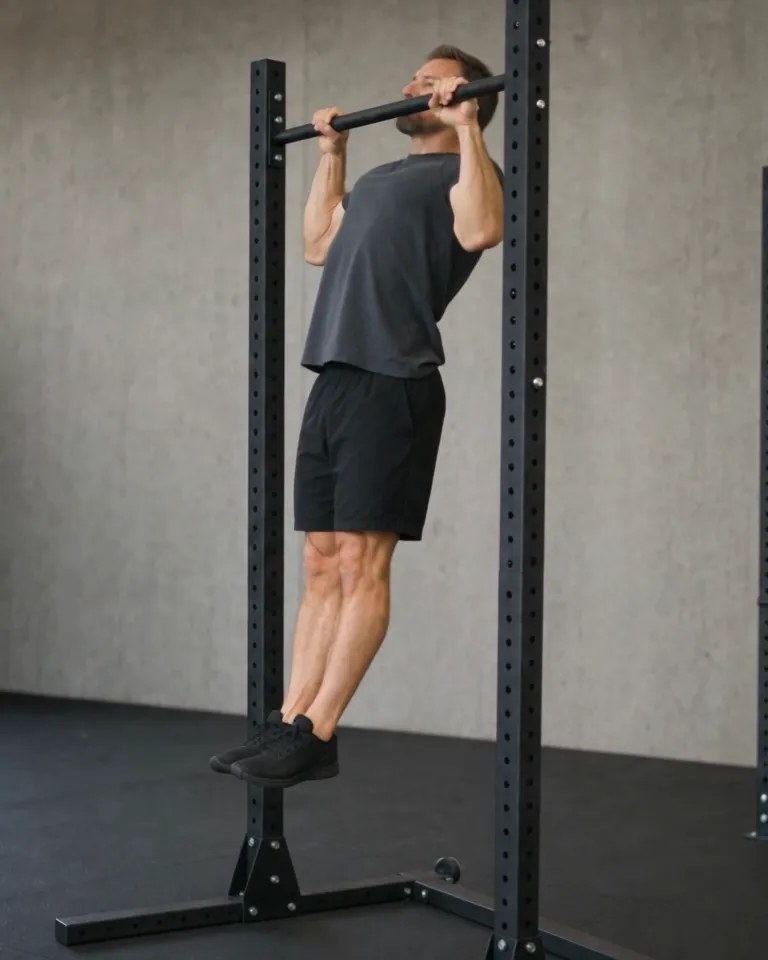
- Grip: carries, dead hangs and towel holds. Cheap, effective and easy to recover from.
- Upper back and shoulders: rows, face pulls and band work to balance all the pulling and framing you do on the mats.
- Hips and single-leg strength: split squats and step-ups build a base that holds up in scrambles and takedowns.
- Trunk: carries, side planks and anti-rotation presses rather than endless sit-ups.
- Neck: light, controlled work if you have no neck issues. If you do, skip it and get advice first.
 Dead hang
 Single-arm dumbbell row
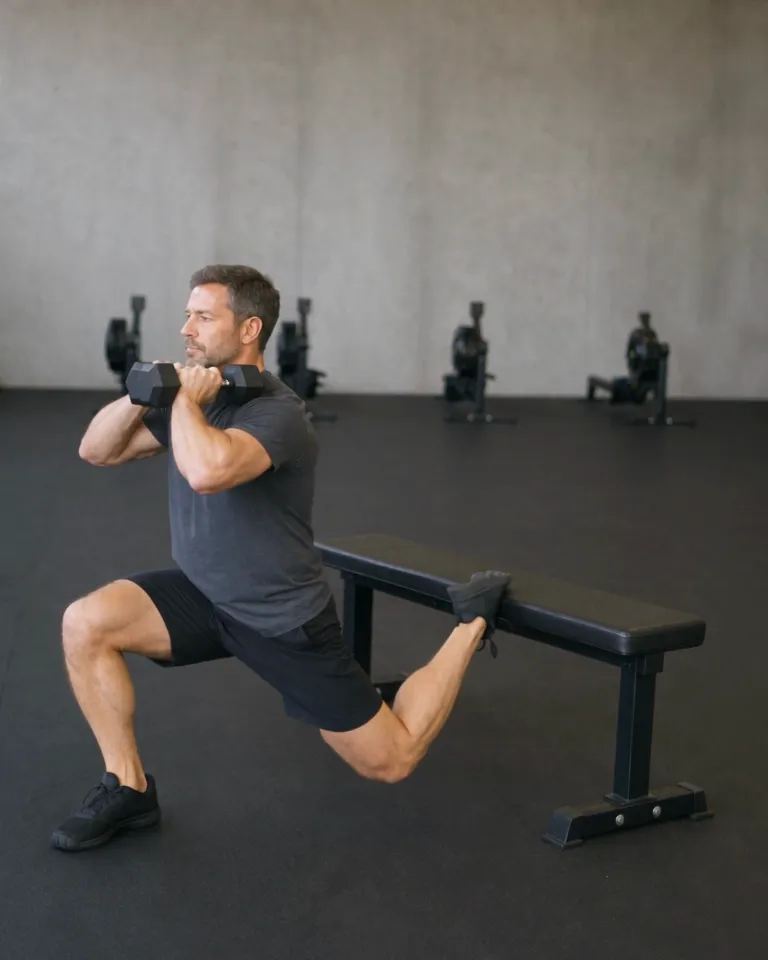 Rear-foot elevated split squat
 Pallof press
Conditioning without the beating
The mats already give you plenty of hard intervals. What many older grapplers lack is an aerobic base, the engine that helps you recover between rounds. One or two easy sessions a week of 20 to 40 minutes on a bike, rower or brisk incline walk, at a pace where you can still talk, builds it without adding wear to your joints.
Shorten, swap, don't skip
The days you feel worst are the days a rigid program does the most damage. Have a plan for them:
- Short on time or energy? Do the warm-up, your main lift for a couple of sets, and leave.
- Knee, shoulder or back feeling off? Swap the exercise for one that doesn't load that area, and keep training the rest of your body.
- Something hurts in a new way? Stop and get it looked at by a professional. Training around pain is not the same as training through it.
In their own words
I'm 62 and have been training BJJ for around 23 years. MatStrong has transformed my training and helped me keep rolling with more confidence.
Noel, 62-year-old black belt and MatStrong member
The bottom line
After 40 you don't need less ambition, you need a better dose. Lift twice a week, stop short of failure, pick joint-friendly variations, warm up properly and have a plan for bad days. Do that consistently and you'll still be strong on the mats for a long time.
Common questions
Is 40 too old to start BJJ?
No. Plenty of people start jiu-jitsu in their 40s and keep training into their 60s. Pick a gym with good training partners, roll at a pace you can recover from, and build strength alongside your mat time.
Is 40 too old to start strength training?
No. You can build strength and muscle at 40, 50 and beyond. Start lighter than you think, warm up properly, stop sets with a few reps in reserve and progress gradually.
How often should you lift for BJJ after 40?
Two sessions a week, with at least a day between them, suits most people over 40 who also roll regularly. If you roll four or more times a week, one solid session plus one short one is often better.
General training information, not medical advice. If something hurts, or you have a condition that affects how you train, see a qualified professional before you change your training.
Your plan in 5 minutes
Take the quiz