BJJ and lifting: how to schedule strength training around jiu-jitsu
Should you lift before or after BJJ, and how many days a week? Where to put your lifting when you roll two, three or four times a week.
MatStrong · October 20, 2026 · 5 min read
The short version
- Jiu-jitsu comes first. Lifting is there to make you better on the mats, so plan it around your mat days, not the other way round.
- Two lifting sessions a week is enough for most people who roll three or more times.
- Keep your heaviest lifting away from your hardest rolling, and leave a few reps in the tank in busy weeks.
- When the week changes, shorten the session rather than skipping it or cramming it in later.
Most strength programs are written for people whose only training is the gym. You have something else on the calendar: classes, open mats, maybe a competition. Drop a standard four-day gym split on top of three or four nights of rolling and something gives, usually your legs on Thursday night.
The fix isn't to lift less seriously. It's to decide where the lifting goes before you decide what it is.
Start with your mat days
Write down the nights you actually train jiu-jitsu, and mark which ones are hard. A drilling-heavy fundamentals class costs you far less than a competition class with six rounds of hard sparring. Those hard nights are fixed points. Everything else works around them.
Then ask what you want from the gym. For most grapplers it's some mix of:
- Strength under pressure: a stronger base, frames and posture when someone heavy is on top of you
- Power: more drive in shots, bridges and scrambles
- A bigger gas tank: recovering faster between exchanges and rounds
- Resilience: shoulders, neck, knees and lower back that hold up to years of training
You don't need a lot of gym time to move all of those. You need the right sessions in the right places.
How many lifting sessions?
The more you roll, the less lifting you can recover from. As a starting point:
| You roll | Lifting sessions | Typical length |
|---|---|---|
| 1–2 times a week | 2–3 | 45–60 min |
| 3 times a week | 2 | 45–60 min |
| 4–5 times a week | 1–2 | 30–45 min |
| 6+ times a week | 1 short session, or 2 very short ones | 20–30 min |
Two good sessions every week beat four that you're too sore to finish. Consistency over months is what builds strength, so pick a number you can repeat on a bad week, not just a good one.
Where to put the sessions
Spread them out
Put at least a day between lifting sessions where you can, and avoid stacking a heavy lower-body day right before your hardest sparring night. If Tuesday and Thursday are your hard rolling nights, Monday and Friday (or Wednesday and Saturday) are natural lifting days.
Should you lift before or after BJJ?
Sometimes the only free slot is the day you roll. That's fine. A few rules of thumb:
- Lift in the morning, roll in the evening if you can. A few hours between the two makes a big difference to how fresh you feel on the mats.
- If they're back to back, roll first. Technique suffers more from fatigue than lifting does, and jiu-jitsu is the priority.
- Keep same-day lifting lighter: fewer sets, nothing to failure, and less volume for the legs.
A sample week: three nights of BJJ
| Day | Mat | Gym |
|---|---|---|
| Monday | – | Strength A: lower body focus, 45 min |
| Tuesday | Hard class | – |
| Wednesday | Fundamentals | – |
| Thursday | Hard class | – |
| Friday | – | Strength B: upper body and pulling, 45 min |
| Saturday | Open mat (optional) | – |
| Sunday | – | Walk, mobility, rest |
If Saturday's open mat is hard, keep Friday's session shorter and lighter on grip.
What goes in a session
A 45-minute session for a grappler usually follows the same order:
- Warm-up (5–10 min): get the hips, shoulders and spine moving.
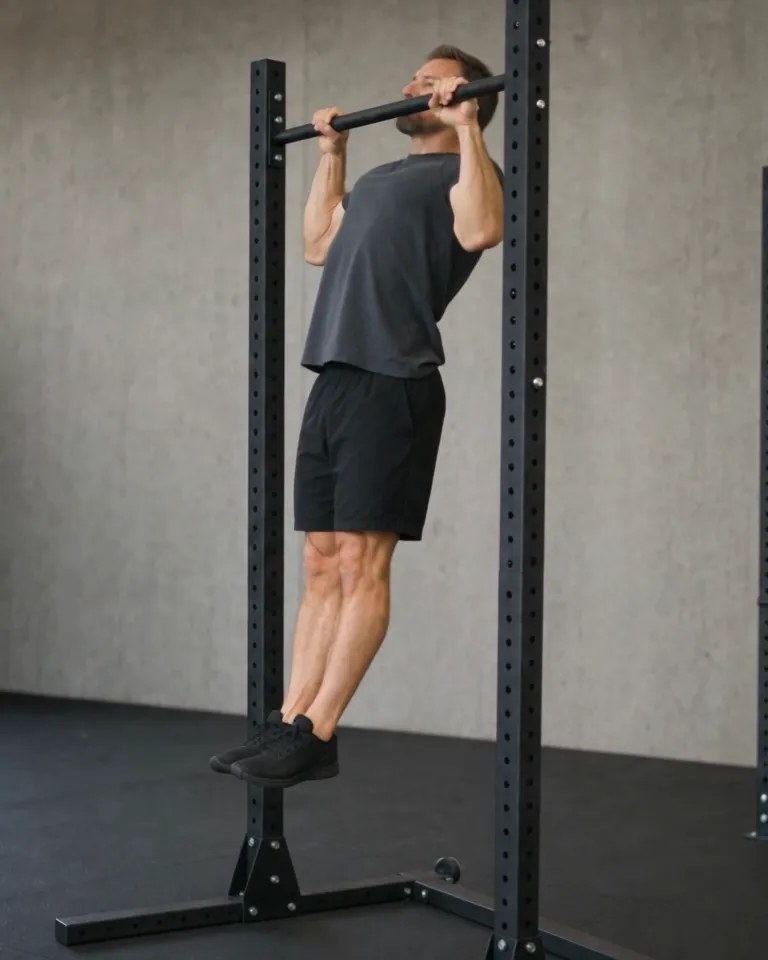
- Power (5–10 min): jumps, med ball throws or kettlebell swings while you're fresh. Low reps, full intent.
- Main lift (15 min): one big movement such as a squat, deadlift, press or pull-up, done for a few hard but clean sets.
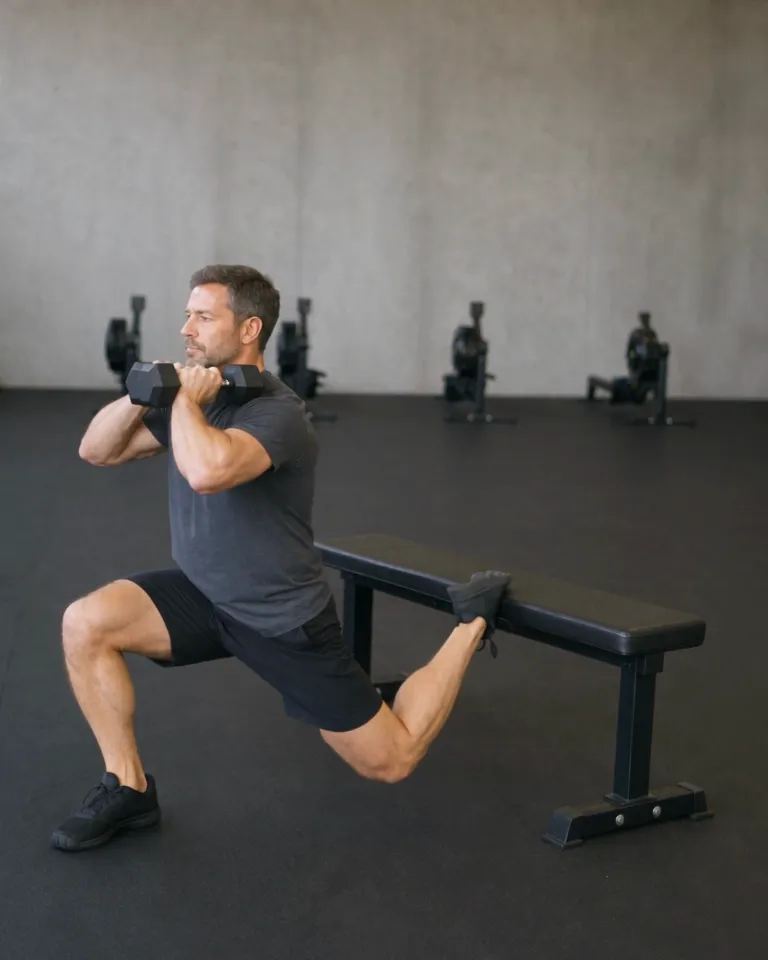
- Single-leg and pulling work (10–15 min): split squats, step-ups, rows. This is where a lot of the carryover to jiu-jitsu lives.
- Grip, neck and trunk (5 min): carries, hangs, holds and anti-rotation work.
One session, in order
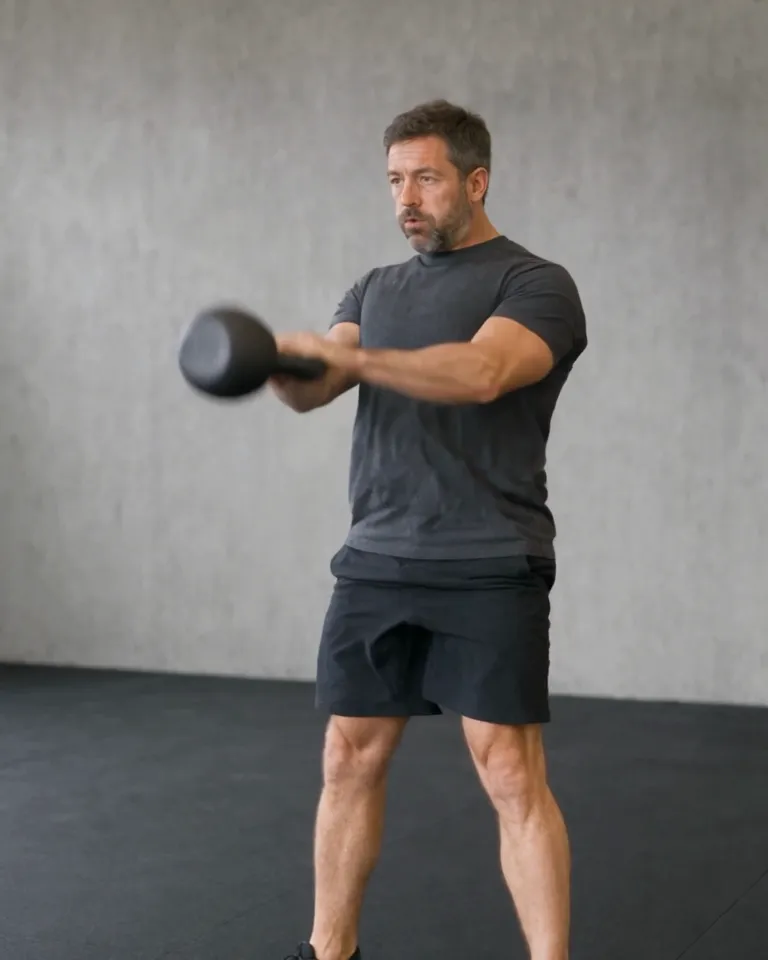 Kettlebell swing
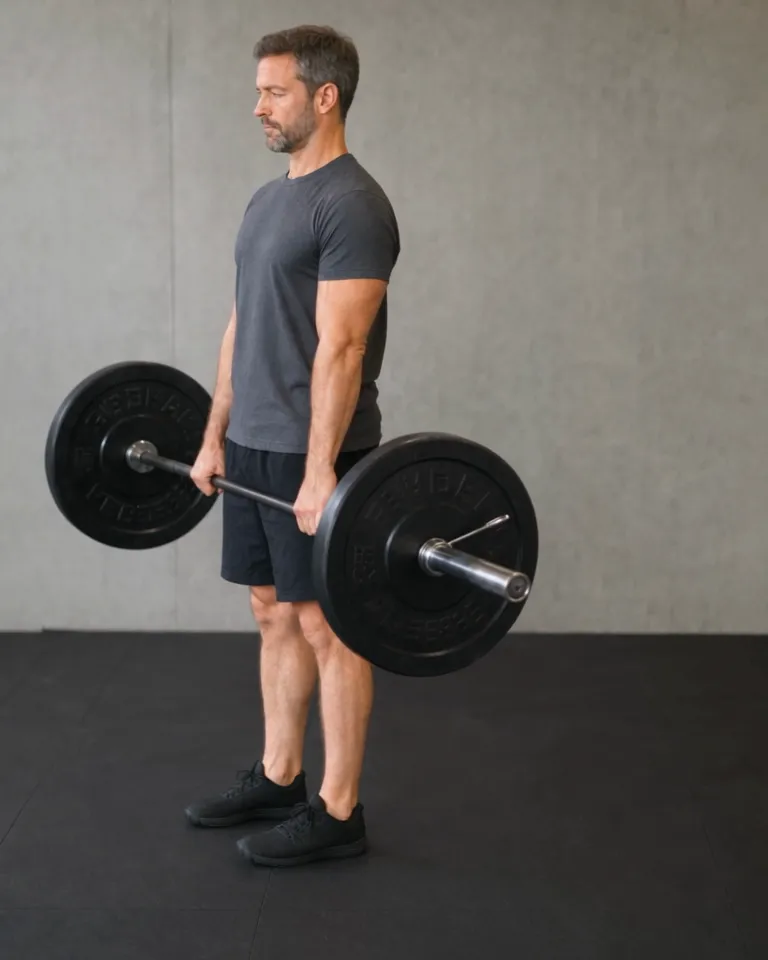 Deadlift
 Single-arm dumbbell row
 Farmer's carry
On a 30-minute day, keep the warm-up, the main lift and one accessory. Cut the rest.
For full sessions you can follow, see the free BJJ strength training program, with 2-day and 3-day plans.
Leave reps in the tank
The quickest way to ruin your next class is to grind every set to failure. For most sets, stop with two or three good reps left. You'll still get stronger, and you'll show up to class able to move.
Rate how hard each exercise felt. Easy means you can add load or reps next time. Empty means hold or back off. Over a few weeks this does more for your progress than any fixed percentage table.
When the week falls apart
It will. Work runs late, you pick up a tweak, or the gym is closed. The rule is simple: shorten, don't skip.
- Short on time? Do the main lift and one accessory.
- Something feels off? Swap the movement for one that doesn't load that area, rather than abandoning the session.
- Missed a day? Don't double up later in the week. Carry on with the next session.
Around competitions
In the last week or two before a competition, most coaches cut lifting volume right down: fewer sets, lighter loads, nothing new. Your jiu-jitsu and your weight cut matter more than a gym PR. Keep a little speed and strength work in so you don't feel flat, then rebuild after the event.
The bottom line
Decide where your hard rolling goes, place two lifting sessions away from it, keep a few reps in reserve, and shorten sessions instead of skipping them when life gets busy. That alone puts you ahead of most people trying to fit a gym program around jiu-jitsu.
Common questions
Should you lift before or after BJJ?
If they're back to back, roll first and lift after. Technique suffers more from fatigue than lifting does, and jiu-jitsu is the priority. Better still, separate them by a few hours: lift in the morning and roll in the evening.
Can you lift weights and train BJJ on the same day?
Yes. Keep the lifting session shorter and lighter than usual, avoid sets to failure, and go easy on leg volume before a hard sparring night.
How many days a week should I lift for BJJ?
Two days suits most people who roll three or more times a week. If you roll once or twice, two or three days works. If you roll five or more times, one or two short sessions is plenty.
When should you stop lifting before a BJJ competition?
Most people don't stop completely. In the last week or two, cut the number of sets right down, keep the weights moderate and keep a little speed work, so you arrive fresh without feeling flat. Avoid anything new or very heavy in the final week.
General training information, not medical advice. If something hurts, or you have a condition that affects how you train, see a qualified professional before you change your training.
Your plan in 5 minutes
Take the quiz